


Some watches are important because of their complications. Others because of their rarity. And then there are watches like the Universal Genève Polerouter—a piece that quietly shaped design history while introducing one of the most refined technical solutions of its time.
Released in the mid-1950s by Universal Genève, the Polerouter was born in a moment of transition. Aviation was entering the jet age, and commercial flights were beginning to cross the polar regions—routes that exposed watches to strong magnetic fields near the Earth’s poles. Universal Genève saw an opportunity to create a watch tailored for this new era of travel.
Originally launched as the “Polarouter” in 1954, the watch was developed for Scandinavian Airlines System pilots flying transpolar routes. Its purpose was not just symbolic—it was functional. The movement was designed to resist magnetic interference, ensuring accuracy even in challenging conditions. Shortly after its release, the name evolved into “Polerouter,” becoming one of the brand’s most recognizable models.
What makes the Universal Genève Polerouter truly remarkable, however, is not only its story—but its designer. The watch was created by a very young Gerald Genta, long before he became famous for icons like the Royal Oak and Nautilus. The Polerouter represents one of his earliest works—and already, his design language is unmistakable.
The case is clean and balanced, with elegant twisted lugs that give the watch a sense of movement even when stationary. The dial is refined, often featuring a crosshair layout and subtle detailing that enhances legibility without overwhelming the design. It’s restrained, but never boring—a hallmark of Genta’s later masterpieces.
Inside, the Polerouter introduced another innovation: the micro-rotor movement. Unlike traditional automatic movements with a full-sized rotor, the micro-rotor is recessed into the movement itself, allowing for a thinner profile without sacrificing automatic winding. This was a significant technical achievement at the time and became one of Universal Genève’s defining contributions to watchmaking.
The early Polerouter models were powered by the caliber 215, later evolving into more advanced micro-rotor calibers such as the 218 and 69. These movements were not only efficient but beautifully constructed, reflecting a level of finishing that placed Universal Genève among the elite manufacturers of its era.
Despite its technical sophistication and elegant design, the Polerouter remained relatively understated. It was never marketed as aggressively as some of its contemporaries, and over time, it became something of an insider’s watch—appreciated deeply by collectors, but often overlooked by the broader market.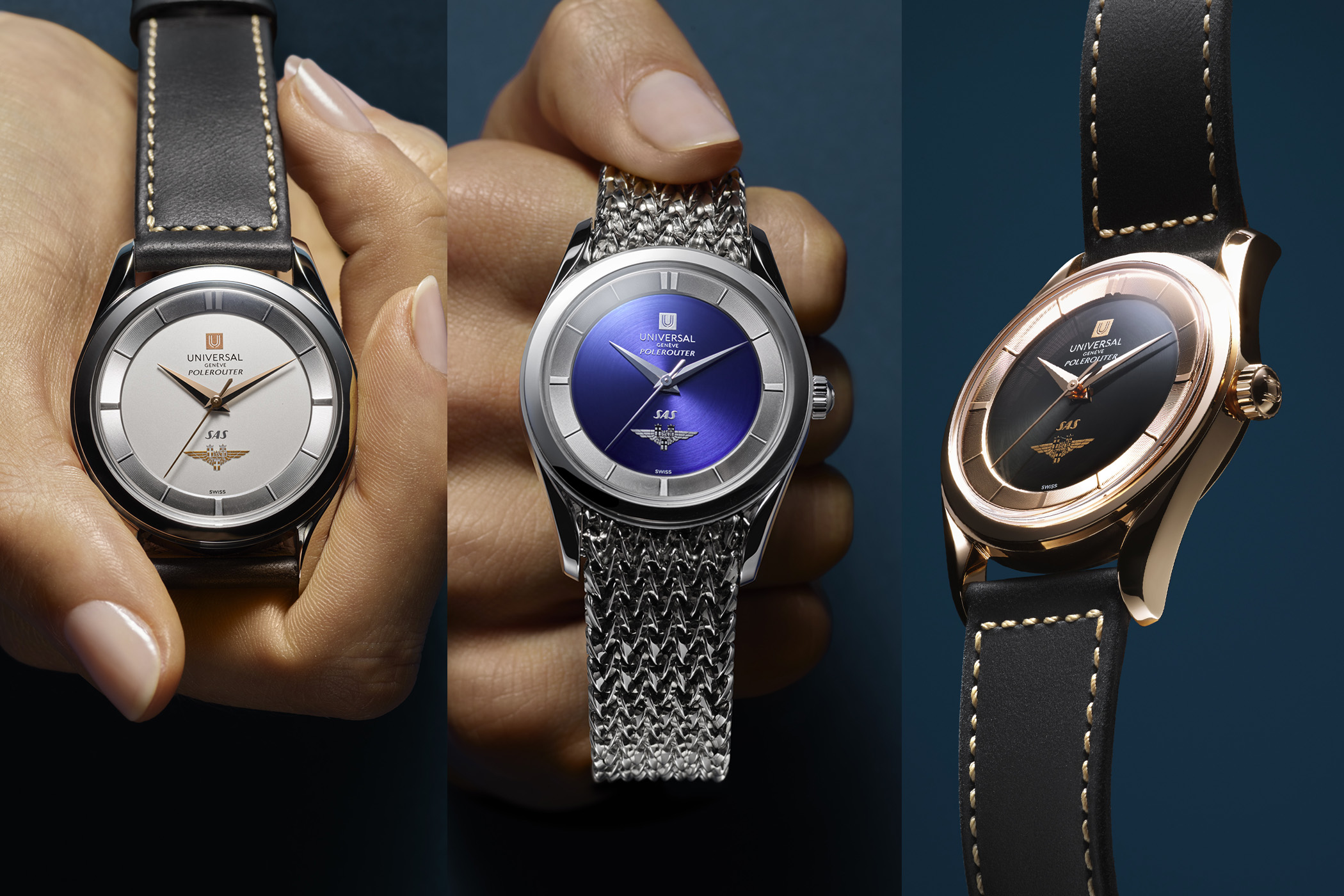
Today, that perception has changed. Vintage enthusiasts now recognize the Universal Genève Polerouter as one of the most important watches of the 1950s. It represents a rare combination of innovation, design purity, and historical context. It is also one of the most accessible entry points into the world of Gérald Genta’s early work.
What makes the Polerouter especially compelling is its balance. It is not oversized, not overly complex, and not designed to impress at first glance. Instead, it reveals itself over time—through proportions, details, and mechanical ingenuity.
In many ways, the Polerouter is a reminder that true innovation doesn’t always need to be loud. Sometimes, it’s quiet, precise, and ahead of its time—waiting to be rediscovered by those who know where to look.