


When people think of rotating bezels, one model immediately comes to mind—the Submariner. But long before dive watches became icons, Rolex had already introduced a concept that would change tool watches forever. That watch was the Rolex Turn-O-Graph—a model that quietly laid the foundation for an entire category.
First introduced in the early 1950s, the Turn-O-Graph holds a unique place in Rolex history. It was the brand’s first watch to feature a rotating bezel, designed not for diving, but for practical, everyday timing. Whether tracking elapsed minutes, parking time, or simple intervals, the rotating bezel transformed the wristwatch into a more versatile instrument.
At first glance, the Rolex Turn-O-Graph may look like a traditional Rolex of its era—clean dial, classic proportions, and familiar Oyster case. But the addition of a bidirectional rotating bezel was revolutionary. It allowed the wearer to interact with time in a new way, turning a static display into a dynamic tool.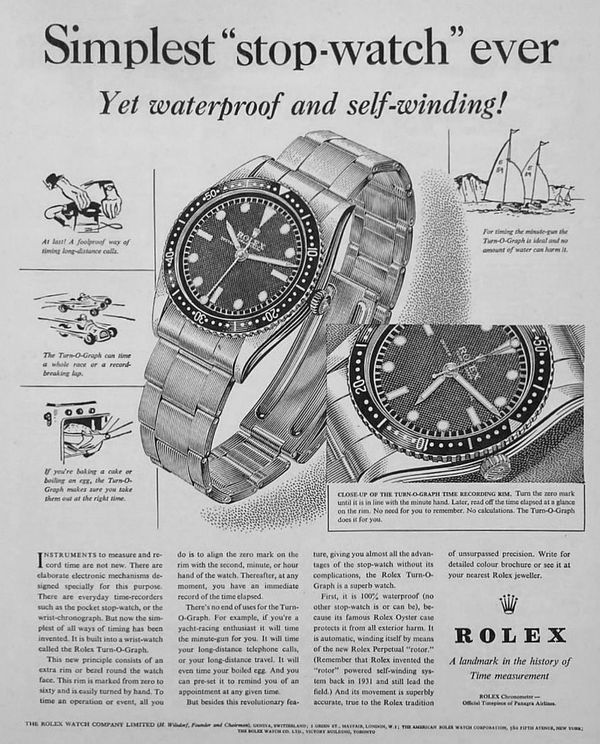
Early models, such as the reference 6202, closely resembled what would later become the Submariner. In fact, the Turn-O-Graph is often considered a direct precursor to Rolex’s iconic dive watch. The key difference was purpose: while the Submariner was engineered for underwater use, the Turn-O-Graph was designed for everyday functionality.
One of the most interesting chapters in the story of the Turn-O-Graph came in 1953, when it was selected by the U.S. Air Force’s Thunderbird aerobatic team. These pilots required precise timing during complex flight maneuvers, and the rotating bezel proved to be a simple yet effective solution. The association earned the watch the nickname “Thunderbird,” a name that would later appear on certain dial variations.
Technically, the Turn-O-Graph was built on Rolex’s proven Oyster platform. It featured a screw-down crown, water-resistant case, and robust automatic movements—ensuring durability and reliability. But it was the bezel that defined its identity. Unlike later professional models, the bezel was relatively understated, often with simple minute markings rather than the bold, high-contrast inserts seen on modern tool watches.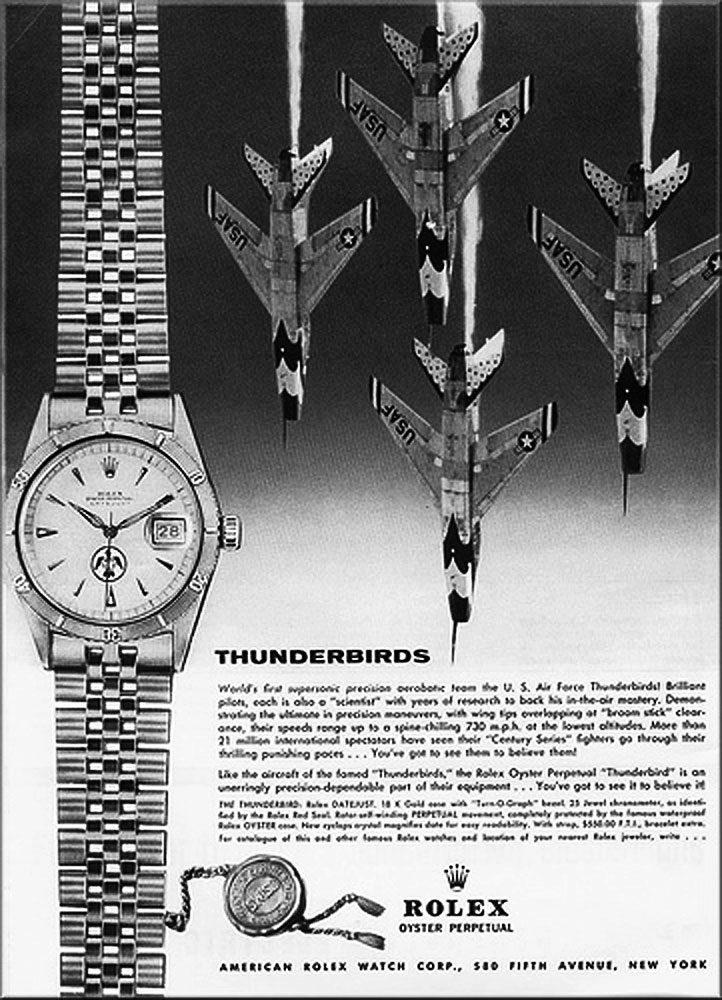
Over time, the Turn-O-Graph evolved. In later decades, it became part of the Datejust family, blending sport and elegance in a way that was unusual for Rolex. Fluted bezels, polished cases, and more refined dials gave the watch a different character—less purely utilitarian, more versatile. Yet the rotating bezel remained its defining feature.
Despite its historical importance, the Rolex Turn-O-Graph never achieved the same level of fame as the Submariner or GMT-Master. Perhaps it was too early, or perhaps its identity—somewhere between tool watch and dress watch—made it harder to categorize. In a brand known for clear archetypes, the Turn-O-Graph occupied a more ambiguous space.
Today, that ambiguity is exactly what makes it interesting. Collectors increasingly recognize the Turn-O-Graph as a key transitional model—a watch that introduced an idea before the market fully understood its potential. It represents a moment when Rolex was experimenting, adapting, and defining what a modern wristwatch could be.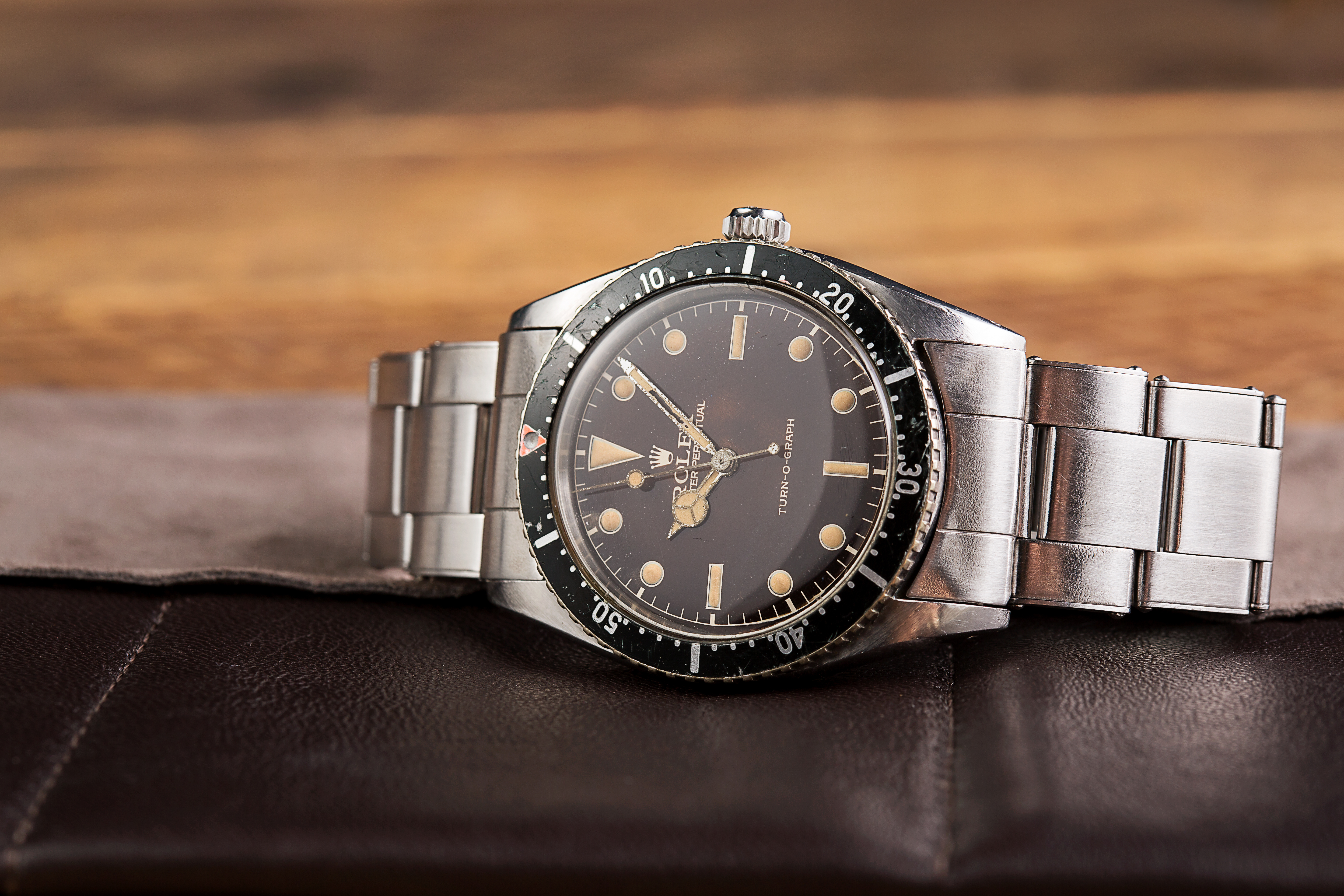
More importantly, it reminds us that innovation doesn’t always come with immediate recognition. Sometimes, it takes years—or decades—for the significance of an idea to be fully appreciated.
The Rolex Turn-O-Graph may not be the most famous Rolex ever made. But without it, the story of rotating bezels—and the watches that rely on them—would look very different.