


In the world of watchmaking, some movements simply serve a function—while others shape the very foundation of the industry. Lemania 2310 belongs firmly to the latter category. More than just a chronograph caliber, it is a benchmark of mechanical design, one that influenced some of the most respected watches ever created.
Developed by Lemania in the mid-20th century, the 2310 quickly established itself as a gold standard for reliability, precision, and intelligent engineering. Its architecture was so well conceived that it not only survived decades of technological change but remained relevant through the quartz crisis and into the modern era of high-end mechanical watchmaking.
At the heart of the Lemania 2310 lies a traditional column-wheel chronograph system. Unlike simpler cam-operated designs, the column wheel delivers a smooth, precise, and highly tactile response when activating the chronograph. This refined “click” is something collectors immediately recognize—and deeply appreciate. It represents a level of mechanical sophistication that has become synonymous with high horology.
The movement is manually wound, operating at 18,000 vibrations per hour with a power reserve of approximately 40–44 hours. Yet its importance goes far beyond specifications. What truly sets it apart is its layout: a beautifully balanced, symmetrical construction with a horizontal clutch system and an intuitive flow of energy. The result is not only technical efficiency but also visual harmony—making it as admired aesthetically as it is mechanically.
Thanks to this balance, Lemania 2310 became the foundation for numerous legendary calibers. Most notably, it served as the base for the iconic Omega Caliber 321, which powered early Omega Speedmaster models—including those worn during NASA’s historic space missions.
Omega, however, was not alone in recognizing its excellence. The same architecture was adapted by Patek Philippe (as the CH 27-70) and Vacheron Constantin (as the caliber 1141). It is rare for a single movement design to be embraced across such prestigious maisons, making the Lemania 2310 a true common denominator of elite watchmaking.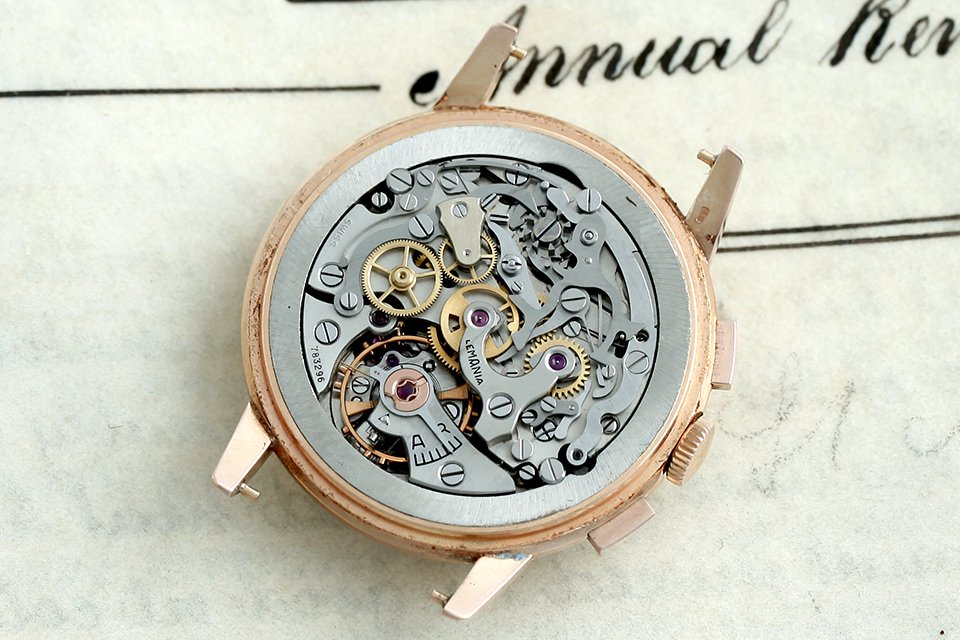
The reason for its widespread adoption lies in its perfect balance. It is neither overly complex nor overly simplified. Instead, it offers an ideal platform—robust enough for daily use, yet refined enough to meet the standards of haute horlogerie. It could be modified, decorated, and enhanced, all while maintaining its core integrity.
Equally important is its durability. The Lemania 2310 earned a reputation as a true “workhorse” movement. It could withstand regular use, was relatively straightforward to service, and delivered consistent performance over time. In an era when watches were essential tools rather than luxury statements, these qualities were invaluable.
Over the years, the movement evolved, adapted, and inspired new generations of chronographs. Even today, many modern chronograph calibers are, in one way or another, rooted in the principles established by the 2310.
Today, Lemania 2310 stands as more than just a movement—it is a symbol of an era when engineering and artistry were inseparable. It represents a rare achievement in watchmaking: a design so enduring that it transcends brands, decades, and trends.
Without it, the history of chronographs would look very different.