


The late 1960s and early 1970s were a time when aviation was evolving at an unprecedented pace. Jet travel was becoming mainstream, long-haul flights were routine, and pilots needed tools that could keep up with this new reality. In response, Omega created one of the most complex and unconventional pilot watches ever made—the Omega Flightmaster.
Introduced in 1969, the Flightmaster was not designed to be elegant or subtle. It was built as a professional instrument, prioritizing functionality above all else. At first glance, its bold, almost oversized case stands out immediately. With multiple crowns, pushers, and color-coded elements, it looks more like cockpit equipment than a traditional wristwatch—and that was entirely intentional.
The defining feature of the Omega Flightmaster is its multi-time-zone functionality. Early versions allowed pilots to track a second time zone using an independently adjustable hour hand. Later models expanded this capability even further, incorporating GMT functions and 24-hour indications—essential tools for pilots crossing multiple time zones.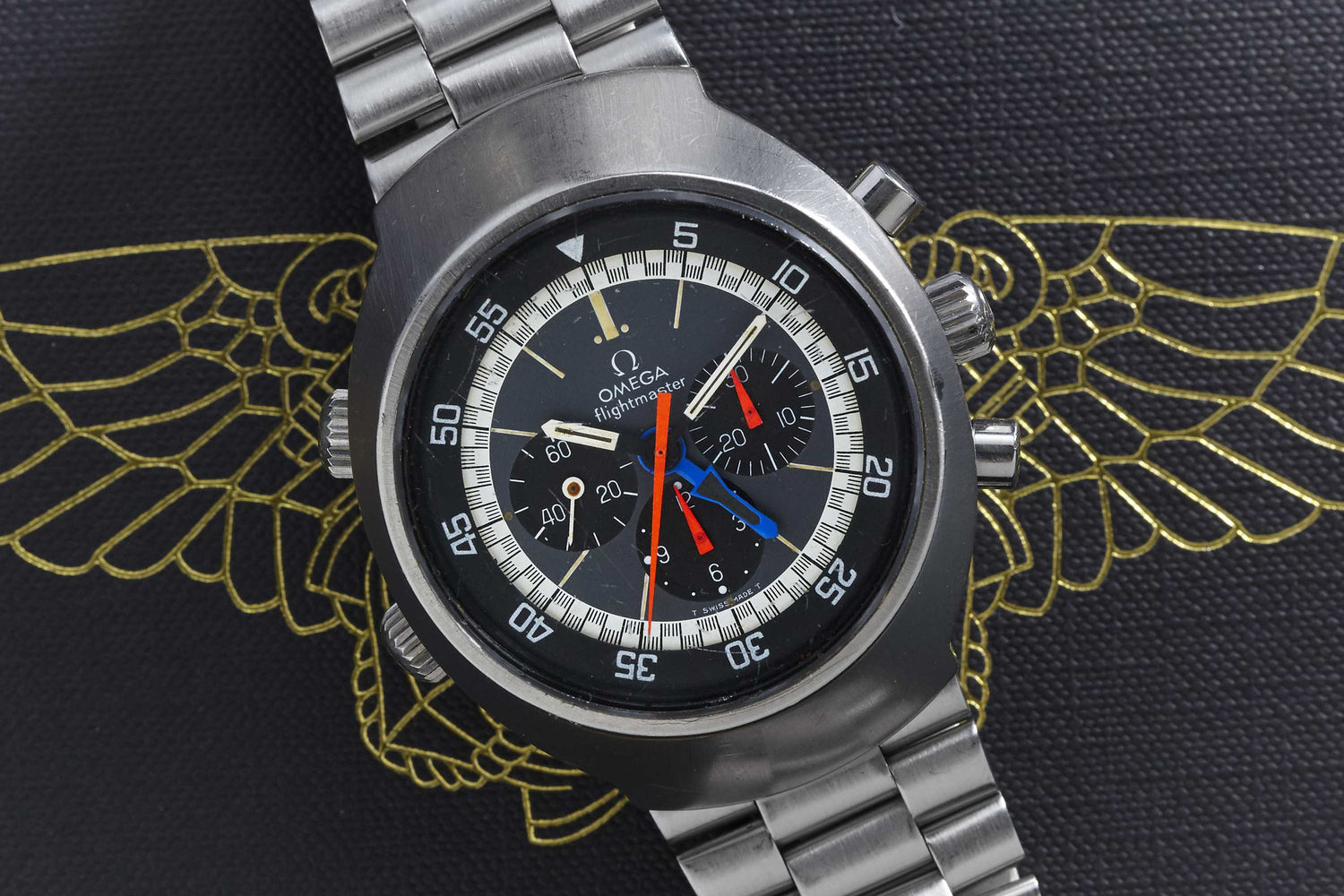
But what truly sets the Flightmaster apart is its interface. Each crown and pusher is color-coded to correspond with a specific function. For example, one crown might control the internal rotating bezel, while another adjusts the secondary time zone. This system allowed pilots to operate the watch quickly and accurately, even under pressure.
Inside, the Flightmaster was powered by robust chronograph movements such as the Omega Caliber 910 and later the caliber 911. These were based on Omega’s proven chronograph architecture, offering reliability and precision in demanding conditions. The movements were protected within a solid, highly durable case designed to withstand shocks, pressure changes, and magnetic fields encountered during flight.
Legibility was another key priority. The dial of the Flightmaster is busy, but intelligently organized. High-contrast subdials, bold hands, and clear markers ensure that critical information can be read at a glance. The use of color is not decorative—it is functional, guiding the user’s eye to the relevant information instantly.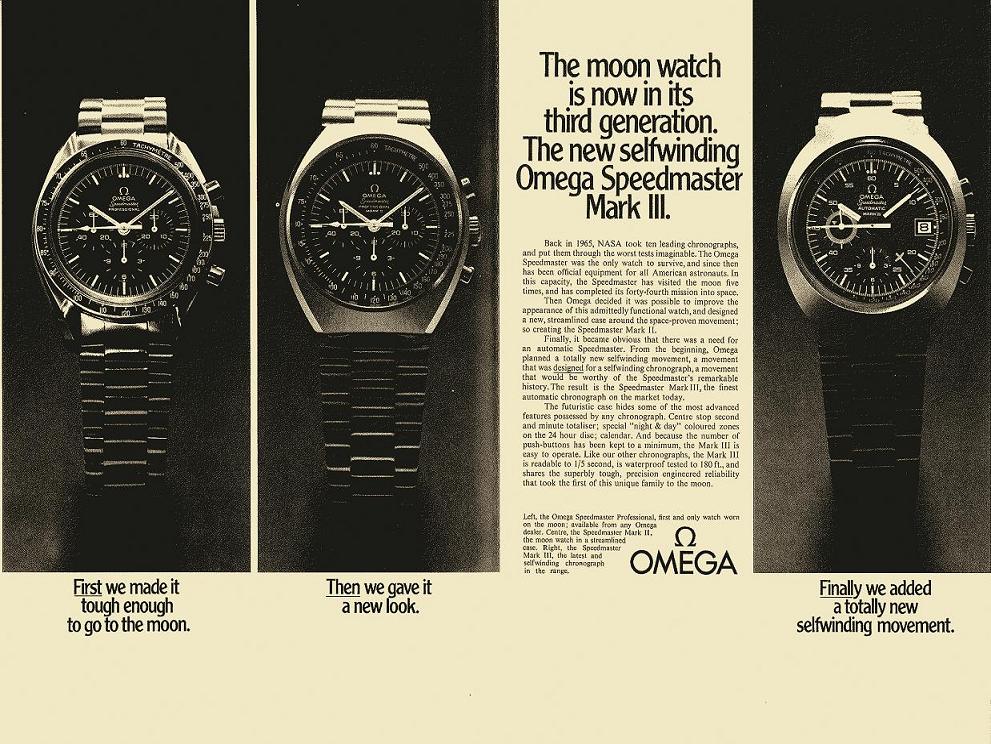
Interestingly, despite being designed for aviation, the Flightmaster never achieved the same iconic status as the Omega Speedmaster, which became synonymous with space exploration. The Flightmaster remained more of a specialist’s tool—appreciated by those who understood its purpose, but less visible in mainstream culture.
Production of the Flightmaster continued through the 1970s, a decade known for bold and experimental watch design. Its large case, integrated look, and technical aesthetic fit perfectly within the era’s design language. However, as aviation technology advanced and electronic instruments became standard in cockpits, the need for such complex mechanical pilot watches gradually declined.
Today, the Omega Flightmaster is recognized as one of the most distinctive tool watches ever produced. It represents a moment in history when mechanical watchmaking pushed its limits to meet real-world demands.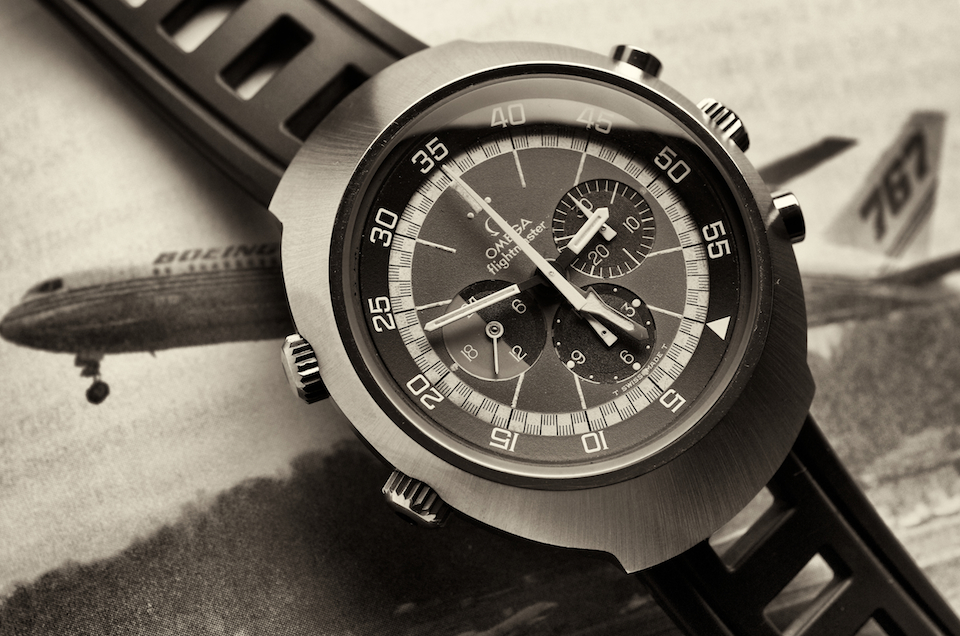
For collectors, the Flightmaster offers something unique. It is not just a watch—it is a statement of purpose. Every detail, from its unconventional shape to its color-coded controls, reflects a commitment to functionality. It is a reminder that watch design can be driven entirely by use, without compromise.
In a world where many watches are designed to appeal visually first, the Flightmaster stands apart. It is unapologetically technical, deeply purposeful, and unmistakably original.
It may not be the most famous Omega ever made—but it is certainly one of the most ambitious.