


Introduction
The figure of the watchmaker holds a significant place in European visual culture, especially in 19th and 20th century painting. Artists depicted watchmakers not only as skilled craftsmen, but also as symbolic figures reflecting the human relationship to time, tradition, and precision.
Character display
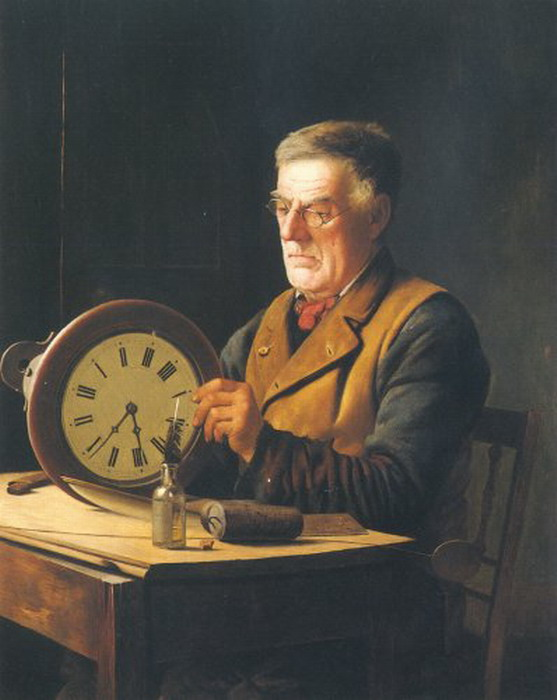
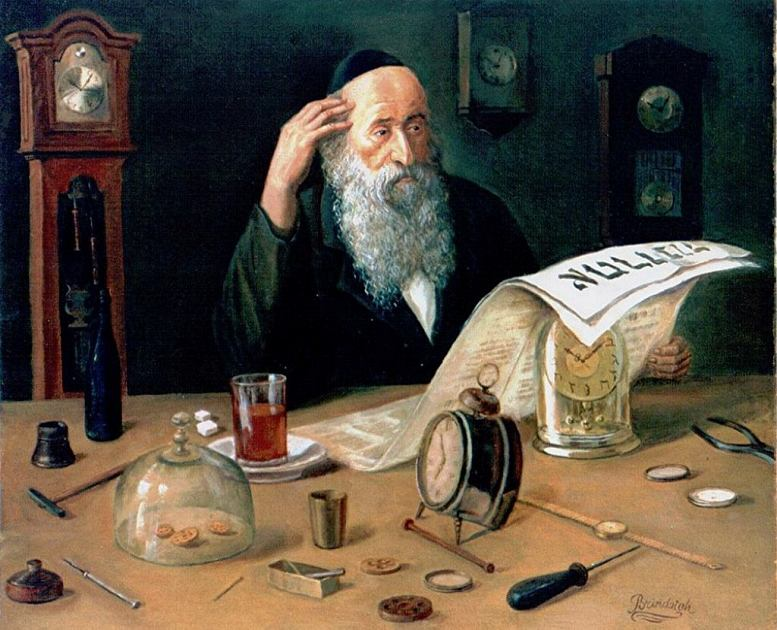
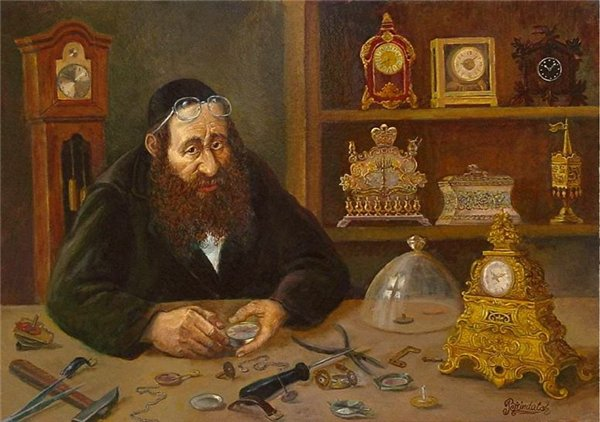
Most often, he is depicted as an elderly man with a beard, wearing magnifying glasses, sitting at a workbench. His posture is focused, his expression thoughtful. He is immersed in delicate mechanical work, and every movement expresses calm concentration. He is not just a technician, but a person whose life revolves around the mastery of timekeeping.

Visual environment
In most paintings, the watchmaker is surrounded by typical workshop elements: wall and table clocks, open mechanisms, screwdrivers, tweezers, glass domes, and containers with springs and wheels. The environment is often warmly lit and carefully composed to emphasize the intimacy and silence of the scene. The visual environment becomes part of the character's inner world.
Symbolism
Beyond the realistic depiction, the figure of the watchmaker acquires symbolic meanings:
• precision and attention to detail,
• intergenerational transfer of knowledge,
• philosophical reflection on the nature of time,
• continuity between past and present.
Some artists bring humor or surrealism to the image: oversized hands, animated clock parts, fantastical environments. These interpretations emphasize humanity's fascination with time and our desire to control it.
Cultural significance
Paintings depicting watchmakers are not only artistically rich, but also culturally valuable. For collectors, restorers and watch enthusiasts, they are a visual tribute to a craft that has shaped generations. They remind us that behind every restored timepiece lies not only a mechanism, but also a human story, a silent heritage and a culture of precision.